Common Usability Mistakes in Children's Websites and Apps: How to Design Better Experiences
In today's digital world, children are a core part of internet users, and we as designers and developers of digital products carry a significant responsibility toward them I've always felt that many insights from global studies resonate deeply with our realities, especially in the Arab market. For anyone searching for a professional app designer or considering redesigning an app targeted at kids, here are some practical tips from my experience as a professional app designer with over 5 years in the field.
Working on designs for children is incredibly rewarding and exciting it's deceptively simple yet profoundly challenging! Projects involving app interface and user experience design for kids demand extensive effort, innovation, and creative ideas We all know, as designers, that children aren't just "smaller adults"; they have unique needs that require specialized thinking Research conducted by the Nielsen Norman Group over 18 years, involving 125 children aged 3 to 12 from countries like the United States, China, and others, uncovered major usability issues across 39 websites and 36 apps These studies highlight positive progress in children's digital proficiency but also expose persistent design gaps So, before you say, "I need a designer to build me an app" for children, or start looking for a UI/UX designer in Egypt, Saudi Arabia, or the UAE, this article will help you understand these problems and how to avoid them in mobile app interface design or app redesign Let's dive in.
Why Children's User Experience Differs from Adults'
We often fall into the trap of designing child-focused interfaces using the same logic as for adults. Children don't read, think, or make decisions like we do They crave high interactivity animations, sounds, and movement while adults might find these distracting In one study, girls spent eight minutes trying to make a page move and play sounds, revealing their high expectations. Kids are also more patient with technical glitches, like page reloads, but they abandon experiences quickly if things don't work as anticipated This makes seamless app interface and user experience design absolutely critical.
Limited Cognitive Abilities but High Curiosity
Children rely heavily on visuals, colors, and motion Long text, complex menus, or unclear instructions cause them to disengage fast. As a UI/UX designer in Egypt, Saudi Arabia, or the UAE, I've seen projects fail simply because the interface ignored this reality.
Short Attention Spans
We know a child can lose focus in seconds Therefore, mobile app interface design for kids must be direct, simple, and deliver rewards quickly. With widespread mobile devices, children under 6 now master gestures like swiping and tapping video icons However, as a professional app designer, I emphasize that traditional designs aren't enough kids skip lengthy text, as seen on sites like U.S. Mint Kids or Roblox, where they prefer purely visual content.
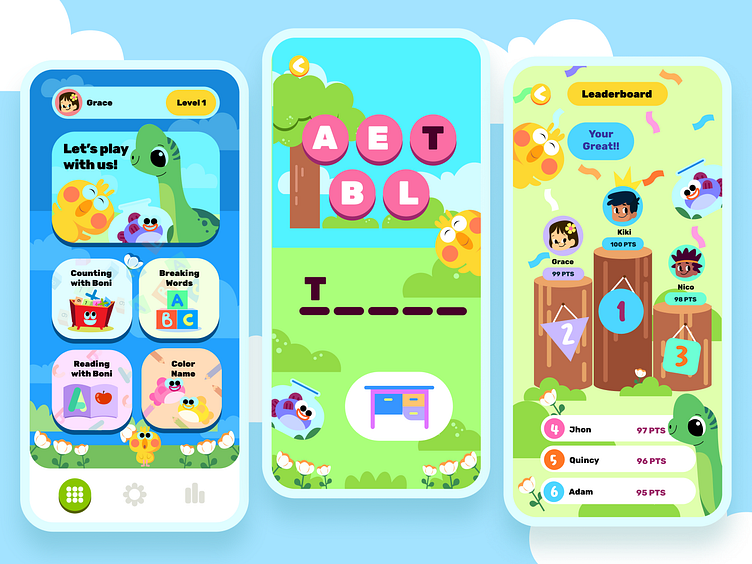
Common Mistakes in Designing Websites and Apps for Children
Overloading Screens with Options
When we pack too many buttons and links, we think we're offering freedom, but we're actually overwhelming the child. A single, clear path is far better.
Unclear Icons
Adults understand settings or menu icons intuitively, but children lack that experience. Icons must be tested with real kids, not just based on the designer's assumption Crowded interfaces and difficult navigation confuse children with excessive links as observed in popular apps where kids ignored long explanations and jumped straight into playing, underscoring the need for simplicity Younger children also struggle with scrolling, so avoid it for those under 6.
Ignoring Parents
A major oversight is not considering parents, who are often the ones seeking safe, easy apps for their kids.
Age-Inappropriate Design
Children reject content that doesn't match their age. One 6-year-old exclaimed during testing, "This is for little kids?!" because of cartoonish elements Non-interactive interfaces frustrated 3-5-year-olds while watching videos or playing.
Blurring Ads and Content
In many apps, children can't distinguish advertisements from core content during videos or gameplay, making designs vulnerable to exploitation. We strongly recommend clear separation to prevent confusion.
Recommendations for Improving UX Design for Children
To create a successful mobile app interface, follow age-specific guidelines We're not just building pretty screens we're crafting complete experiences.
Prioritize Simplicity
Every screen should answer one question: What do we want the child to do next? This is foundational for successful app interface and user experience design.
Boost Interactivity and Safety
Simple animations, sounds, and interactive elements give children a sense of achievement and keep them engaged.
Ensure Safety and Parental Control
Clear, uncomplicated parental settings build trust and boost app success especially for freelance web designers targeting international or Gulf clients. Use standard gestures, animations, and sounds; place parent links in plain text footers; avoid embedded ads. Increased screen time improves proficiency, but always within safe limits.
When to Redesign a Children's App
I believe app redesign becomes essential when you notice:
- Quick user drop-off.
- Difficulty completing tasks.
- Repeated complaints from parents.
This is where a UI/UX designer in Egypt, Saudi Arabia, or the UAE shines one who understands local culture, language, and Arab child behavior, rather than applying generic rules.
Conclusion
Ultimately, designing websites and apps for children is far from easy, but it's one of the most impactful fields. We're not just creating interfaces we're shaping educational and entertaining experiences that can stay with a child for years In my view, the successful designer balances beauty, simplicity, and safety. If you're looking for a professional app designer and about to say, "I need a designer to build me an app" for kids, remember: user experience isn't optional it's the foundation of success.